
How Finance and Operations Can Work From the Same Logic
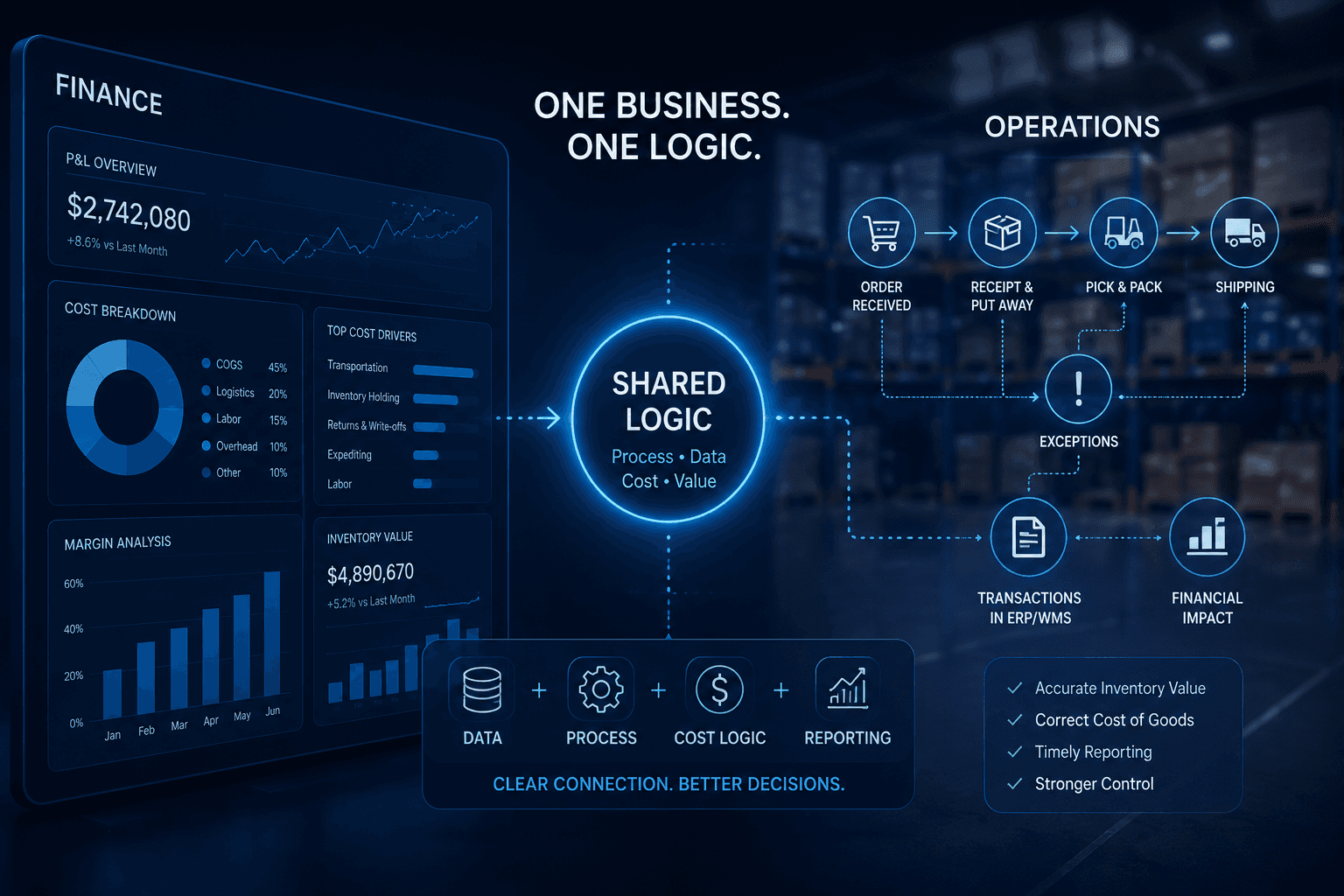
Better alignment helps teams connect cost logic, operational workflows, reporting needs and system behaviour.
Why Finance and Operations Disconnect
Finance and operations often depend on the same data, but they do not always interpret it in the same way.
Operations may focus on what happened in the warehouse, transport flow, system process or customer order. Finance may focus on cost, stock value, accruals, invoice logic, write-offs or reporting accuracy.
When these views are not aligned, the business starts to see different versions of the same reality.
The Cost of Misalignment
Misalignment creates practical problems. Stock movements may not match financial expectations. Process exceptions may create reporting gaps. Invoice issues may be caused by operational steps that were not completed correctly. System behaviour may be technically correct, but unclear from a finance or controlling perspective.
This can lead to extra reconciliation work, delayed decisions, unclear ownership and repeated discussions between teams.
Shared Logic Creates Better Decisions
Finance and operations do not need to become the same function. But they do need shared logic.
That means understanding how operational workflows create financial impact, how system transactions affect reporting, and where process gaps create cost or control issues.
When teams understand the same flow from both perspectives, decisions become clearer.
Where Alignment Starts
Alignment starts by mapping the connection between process steps, system behaviour, cost logic and reporting needs.
Which operational action creates which financial impact? Which system step triggers which reporting consequence? Where do exceptions appear? Who owns the correction? What information is missing when something goes wrong?
These questions help teams move from isolated problem-solving to shared understanding.
From Separate Views to One Operating Logic
The goal is not more meetings. The goal is a clearer operating logic that finance, operations, logistics, IT and reporting teams can all understand.
When finance and operations work from the same logic, businesses reduce friction, improve control, and make better decisions based on the same operational reality.